
Press
PittMoss in the news
For peat’s sake: Persian Gulf sheikh explores deal with Ambridge maker of artificial peat moss
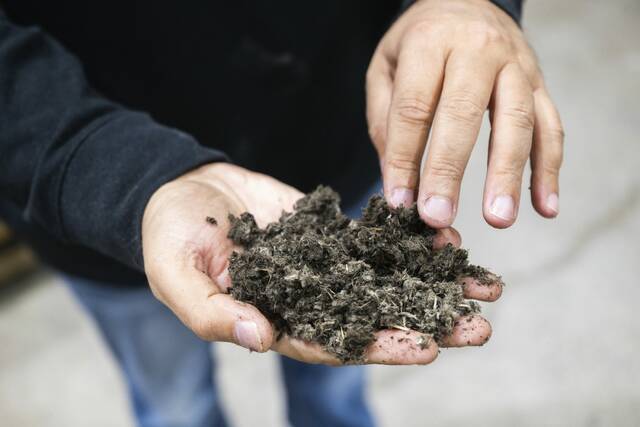
PittMoss CEO Brian Scott holds some of his company’s peat-free growing mix. (Shane Dunlap | TribLive)
PittMoss says its paper and cardboard-based peat moss alternative can do a lot: reduce waste, cut carbon emissions and, critically, grow plants better than the real thing.
The proprietary mixture of shredded recyclables and organic fertilizers might even be able to “totally transform” the soil of one of the driest countries in the world, according to PittMoss CEO Brian Scott.
The company, which operates out of a humble warehouse in Ambridge, Beaver County, reached an agreement in December with Shumukh Al Ezz Group in the United Arab Emirates to explore using its products to enrich the Middle Eastern country’s loose, sandy soil.
Nothing is final, but the goal is for PittMoss to license its technology to Shumukh Al Ezz Group so the Abu Dhabi-based firm can start its own factory. That would mark the first time PittMoss has been made outside of Southwestern Pennsylvania.
“If we feel it’s helpful in our agriculture, then we can do the manufacturing here, because it’s costly to bring all these things from the United States,” Sheikh Mohammed bin Musallam bin Ham Al Ameri, the billionaire businessman who runs Shumukh Al Ezz Group, told TribLive by phone on Wednesday.
The country’s agricultural sector could use all the help it can get. As a government website puts it, the UAE is characterized by “low rainfall, high temperatures, poor soil and lack of natural waterways.” That makes farming a challenge for the tiny petrostate, whose more than 11 million inhabitants are fed mostly by imports.
Read the whole article here
Needed or wanted: Substrate extenders, and alternatives
Recent shortages in the supply chain have led to many growers being forced or highly encouraged to turn to “Plan B” in their substrate toolbox.
December 22, 2021
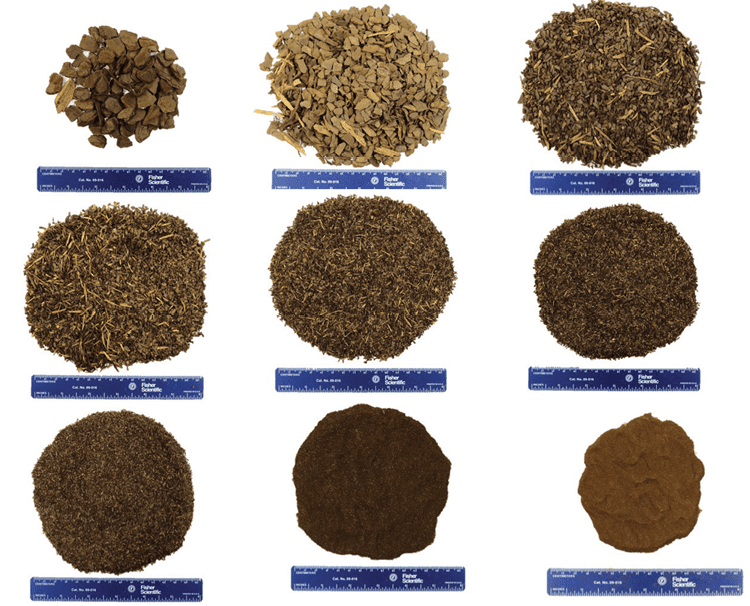
Fig. 1. The ability of bark materials to be easily engineered is one of several reasons for its increased usage in many types of growing media.
Photo credits: All photos were taken by Brian Jackson
Either proactively or reactively, the need for substrate (growing media) options is always important for growers.
Recent shortages have led to many growers being forced or highly encouraged to turn to “Plan B” in their substrate toolbox to bridge the gap between increased demand and some drastic shortages of common growing media components and products.
Many growers have even had to turn to “Plan C” or beyond to acquire the volumes of substrates needed for their rapidly expanding operations. Aside from supply shortages, other consumers have elected to explore new or alterative substrate options based on sustainability beliefs and goals, desire to use local or regional materials, the opportunity to utilize raw materials they already have access to, or to adopt new substrates that are better crafted to better optimize the crops they are growing in the specific growing systems they are utilizing.
Whatever the reason, the interest and demand for non-traditional substrate materials has never been higher, a trend that will only increase exponentially in the future.
This article will discuss some of the materials that are in higher demand and use today based on any or all of the above-mentioned reasons. It is also very important to note that not all possible substitutions or alternatives are listed here, as there are many that warrant attention and consideration.
Lastly, it should be strongly emphasized that there are no “replacements” for any substrate materials, as it is impossible to truly and literally replace something. So, there are no “peat replacements” or “perlite replacements” but instead viable materials that are suitable alternatives or substitutions to certain commonly known (traditional) materials.
Processed bark
While not new or novel in any way, processed bark materials continue to evolve in their usage across many substrate product lines and growing systems (Fig. 1). A material used by growers since the 1960s,bark, particularly aged pine or fir bark, continues to fill the void left behind by peat or coconut (mainly coir) product shortages. Most traditionally used in outdoor ornamental nursery crop production and more recently in soft fruit container production, the use of bark as a an aggregate additive or extender to peat in greenhouse substrates has increased significantly in the past decade. Thanks to advanced and particular processing techniques and handling methods, bark can be processed into a wide range of particle sizes as illustrated in Figure 1. These size fractions can then be combined in any conceivable combination to engineer a substrate with very specific air and water properties, drainage profiles, densities, or structure for long-term container production.
For example, bark can be processed (double processed), fractioned, and reconstituted to have identical air and water porosities has any peat or coir substrate. Couple those abilities with the option of blending other materials with bark, and the options for nursery, greenhouse/floriculture, cannabis, or soft fruit production can be successful, even without traditional peat or coconut coir (excellent materials by the way) if they are unavailable or not desired.

Fig. 2. Biochar product offering and use continues to increase in the growing media industry (A-B) and rice hulls have gained even more interest and utilization as substrate aggregates (C-D).
Biochar additives
Interest remains high for biochar products as additives or substitutes in soilless substrates (Fig. 2A-B).
Perhaps still more of a highly specialized or “novelty” component for many growers, others have trialed or adopted biochar products in some of their operations.
First, it is worthy of discussion that “biochar” can in many justified ways be considered a verb and a noun based on the high variability that can (and does often) exist in commercial products based on manufacturing methods and feedstocks. Similar to compost, biochar products can be extremely variable from source to source and even within a single production source over time. The cost of biochar also remains high in many areas and therefore is often not as economical as other materials.
The availability, consistency, and cost of biochar products is improving, however, and eventually the price and quality will likely be highly predictable and dependable.
As far as uses, despite some report’s, biochar cannot replace peat moss, but it can serve as an adequate substitute for perlite and it can be used as a partial peat or bark substitute or extender if the particle size is suitable/acceptable to the mix it is being added to. The stability that biochar adds to substrates is exceptional (for longer term perennial crops in containers) and most biochars can provide some limited nutrient availability to crops, increased nutrient holding and exchange capacities, and it can also initiate or host beneficial biological/microbial activity in soils and soilless substrates.
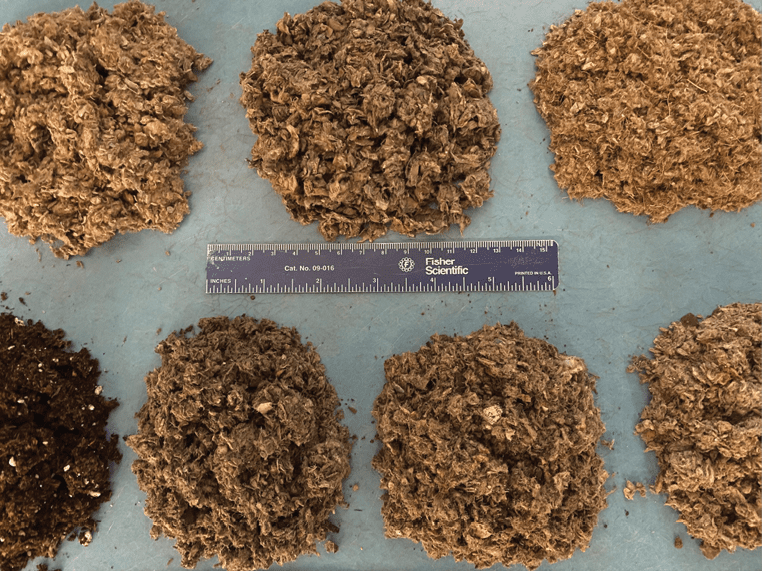
Fig. 3. Pittmoss’ product line has expanded in recent years and now offers growers many choices for various types of crop production.
Photo credits: All photos were taken by Brian Jackson
Rice hulls
Rice hulls have seen a tremendous boost in sales and utilization across the horticulture industry in recent years. Thoroughly developed in the early 2000’s in large part due to research efforts from Dr. Mike Evans at the University of Arkansas (currently at Virginia Tech), rice hulls have been a trusted and viable commercial substrate component for many years.
Investigated as a substrate aggregate (perlite substitute), rice hulls were also discovered to be a highly effect weed barrier when used as a container mulch on outdoor (nursery) crop production. The extreme shortages in the perlite supply chain since 2020 have renewed the interest and use of this material as an aggregate to peat substrates. Available in small and large compressed bales, parboiled rice hulls are a regionally available (Arkansas and the Mississippi delta), organic by-product with large volumes of supply typically available (Fig. 2C-D).
Pittmoss
No stranger to the growing media arena, Pittmoss is a product line (as well as the name of the company and brand) that has been producing growing media components since about 2015. Originally produced from just recycled newspapers and cardboard, today the Pittmoss product line uses other recycled organic/cellulosic materials as well.
No longer a local Pennsylvania and surrounding states product, Pittmoss now has at least seven products available for both professional and retail/hobby markets (Fig. 3). Best when used as an additive or extender to peat moss, coconut coir, aged bark or perhaps even wood fiber, the inherent physical and chemical properties seem to be suitable and beneficial as a mix component. Perhaps a good option for extending peat and coir supplies for short(er) term crop production.

Fig. 4. Miscanthus biomass can be processed in different ways (extruded, disc-refined, and hammer milled) to create unique fibrous materials for potential use as substrate components.
Processed miscanthus
The outlier of the group, processed miscanthus biomass, is appearing more and more on the alternative substrates radar.
Initially investigated well over a decade ago for its potential use as a component in nursery crop production, miscanthus today is being evaluated heavily again for other potential uses.
The availability of miscanthus biomass mostly comes from the large acreage that was planted 10-15 years ago during the early stages of the biofuel revolution when investors, business folks, and growers were planting thousands of acres proactively in hopes that the biomass market (for biofuel production) would explode and be a huge return on investment. While there is still biomass and biofuel research being conducted today, the volume of unutilized miscanthus in the eastern US is extensive.
Based on new processing technologies and material preconditioning treatments, miscanthus grass can be refined in to very fiberous, water absorbing, and low-density substrate components (Fig. 4). The potential for this fiberous material to be a suitable substrate component for short term crop production is increasing.
The author is a Professor of Substrate Science and Director of the Horticultural Substrates Laboratory at NC State University. Brian can be reached at Brian_Jackson@ncsu.edu
https://www.greenhousemag.com/article/growing-media-substrate-alternatives/
GrowCast: Environmental Cost of Peat, Sustainable Grow Media, and More, with Ashley from PittMoss
Brand new guest from the sustainable paper based grow media company PittMoss- Ashley joins the show for an episode all about sustainable growing, using paper waste for grow media, and more! Ashley talks about the prevalent use of peat moss in cannabis gardening, and goes into detail on what the peat harvesting and production process looks like. Ashley talks about the “peat bogs” where the material comes from and emphasizes that miles and miles of natural habitats are being cleared for the harvesting of this moss. She also talks about the possibility of a shortage, or a price increase in the world of peat moss, and what that might look like for the cannabis cultivation industry. Ashley also of courses discusses her alternative product PittMoss, and even made a coupon code GROWCAST for 15% off!
Purdue Northwest uses eco-friendly moss in ag-tech project
Eco-friendly PittMoss to be used in Purdue University Northwest agriculture-tech project
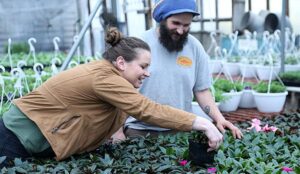
Ashley and Gary Borrow use eco-friendly peat moss in their local greenhouse at Purdue University Northwest.
PittMoss, made from recycled paper, is more efficient, effective, environmentally-friendly than conventional peat-based potting soils.
PITTSBURGH — Back in the 1990s, Mont Handley was managing a retail nursery and selling truckloads of Canadian peat moss when he read about how devastating its loss could be for the problem of climate change.
“A little 3% of the Earth’s land surface does way better job at sequestering or locking away carbon than the rain forests, which get a lot more publicity,” Handley said.
So he started PittMoss, a Pittsburgh-based peat substitute made from recycled paper that happens to be more effective for growing plants than traditional peat moss. He ended up on the ABC show “Shark Tank,” where he won investments from the “Sharks.”
Handley later handed off the business to an experienced investor, Brian Scott, and became Entrepreneur-in-Residence at Purdue Northwest, in Indiana. This school is doing some of the world’s most advanced agriculture-tech research, and was awarded a federal SPRINT Challenge of more than $1 million to find new solutions for the economic, health and safety risks exposed by the coronavirus pandemic.
Now, Handley is using PittMoss again in Project TRAVERSE, which also uses remotely-operated robotics to grow nutrient-rich produce. There’s a data center being built upon the site of a former coal-burning power plant on the tip of Lake Michigan, which is making a gift of a 4,000-square-foot greenhouse to Purdue Northwest. The data center’s servers are exhausting heat to serve the greenhouse.
“It’s a robotic laboratory, essentially, so we can actually start to deploy and develop ag-tech automation,” Handley said. “And so the very first thing we’re doing is going to be growing tomatoes that will be harvested remotely by workers who are sitting in their homes or offices, utilizing standard Xbox joysticks and things like that, to select and pick the right produce.”
So now Handley’s career has come full circle, and he’s using PittMoss in the greenhouse project.
“We are using PittMoss because I’m familiar with it, they asked me to be the grower, and I’m going to use the best product available to me,” he said.
They’re also working with “Plantennas” — “with a propagation pot that has a sensor embedded into it,” Handley said. “And it allows the plant to become its own unit level sensor so the robot will actually sense what the plant is and we’ll know what to do with it. We’re going to be making our Plantenna pots out of PittMoss as well.”
PittMoss, Handley said, also happens to improve aeration, nutrient absorption, and uses less water than conventional peat-based mixes.
“We feel like we can disrupt the soil economy,” said PittMoss President Brian Scott. “Instead of hauling peat moss all over the world, we can use local paper waste to grow food.”
A typical bag of soil (most are 2 cubic feet) has the same carbon emissions as burning 22 pounds of coal. Most peat moss is dug up in peat bogs in Canada and trucked south—and it’s an ecological catastrophe.
PittMoss is currently made from recycled paper and cardboard in a factory in Ambridge, Pa., near Pittsburgh.
“We’re diverting paper waste from the landfill and turning it into soils, basically,” Scott said. “We use lightly processed paper, like newsprint, coloring books, mail ads, magazines, some office paper, as well as cardboard and cardboard dust. Our vision is to have a hyper-local model in every major market to recycle local waste and distribute it locally as a soil.”’
PittMoss calculates that in 2020, its products prevented 81,111 cubic feet of peat moss from being extracted, which equates to the reduction of 811.11 metric tons of C02 emissions. That equals 893,737 pounds of coal burned, or 91,269 gallons of gasoline consumed, or 2.01 million miles driven by an average passenger vehicle.
Annually, PittMoss gives each customer an “Environmental Savings Certificate,” which displays their calculation and certifies a specific number of metric tons of C02 emissions they’ve avoided that year.
“When you fill a pot with PittMoss, it holds water better, you get way better aeration, really good biologicals — so plants absorb nutrients better — and because of that you can fertilize less and water less, and still get a bigger plant,” Scott said.
Find out more at pittmoss.com or investment opportunities at republic.co/pittmoss.
Pittsburgh based eco-friendly PittMoss expanding overseas to Lebanon
PittMoss, made from recycled paper, is more efficient, effective, environmentally-friendly than conventional peat-based potting soils
PITTSBURGH, PENNSYLVANIA—June 5, 2021: It’s a groundbreaking idea – literally.
“We feel like we can disrupt the soil economy,” says PittMoss President Brian Scott. “Instead of hauling peat moss all over the world, we can use local paper waste to grow food.”
PittMoss, the Pittsburgh-based, “Shark Tank”-invested potting soil alternative made from recycled paper, has signed a Memorandum of Understanding (MOU) to expand all the way across the world, to Lebanon. It’s a partnership with the nonprofit DTCare, to expand the world’s most environmentally-friendly potting soil to another part of the world, bringing jobs and eliminating landfill-bound paper waste.
“DTCare’s mission is to advance our goals of promoting civil society, reducing poverty (especially for women), pursuing the advancement of science and scientific research as well as providing jobs and training for veterans,” says DTCare’s president Marco Gruelle.
A new factory in Lebanon is intended to begin a virtuous cycle in a key part of the Middle East, which is teeming with refugees and struggling with poverty.
“This production facility represents a big step forward in helping to manage the flow of reusable waste materials,” says Gruelle. “We have retained experts to help make sure the soil is perfect for the climates it will encounter in the Middle East. The plant will provide a wide range of jobs. Our hope is to also make enough Pittmoss to be able to start soil remediation in the Bekaa Valley, which is the main agricultural area in Lebanon.”
“We studied Pittmoss for about a year in the Arizona desert and found that it is the perfect medium for what we are trying to accomplish, and the fact that it allows us to reuse local waste makes it perfect,” adds Gruelle.
If you’re growing food—or growing anything—PittMoss also happens to improve aeration, nutrient absorption, and uses less water than conventional peat-based mixes. It’s also a victory for the environment.
A typical bag of soil (most are 2 cubic feet) has the same carbon emissions as burning 22 pounds of coal. Most peat moss is dug up in peat bogs in Canada and trucked south—and it’s an ecological catastrophe.
“Peat bogs make up less than 3 percent of the Earth’s land mass, but sequester more carbon than all of the forests on the entire planet,” explains Scott. “They’re a massive carbon sink. You don’t even have to light it on fire–as soon as light and air hits peat moss, it will oxidize and release carbon dioxide and nitrous oxide.”
“The UN has identified elimination or reduction of peat mining as one of their top 10 carbon reduction priorities for the world.”
PittMoss is currently made from recycled paper and cardboard in a factory in Ambridge, PA, outside Pittsburgh.
“We’re diverting paper waste from the landfill and turning it into soils, basically,” says Scott. “We use lightly processed paper, like newsprint, coloring books, mail ads, magazines, some office paper, as well as cardboard and cardboard dust.”
“We are using a broader array of feedstock to prevent more and more cellulose fiber from being landfilled. Our vision is to have a hyper-local model in every major market to recycle local waste and distribute it locally as a soil.”’
PittMoss calculates that in 2020, its products prevented 81,111 cubic feet of peat moss from being extracted, which equates to the reduction of 811.11 metric tons of C02 emissions. That equals: 893,737 pounds of coal burned, or 91,269 gallons of gasoline consumed, or 2,012,680 miles driven by an average passenger vehicle.
Annually, PittMoss gives each customer an “Environmental Savings Certificate,” which displays their calculation and certifies a specific number of metric tons of C02 emissions they’ve avoided that year.
It also just works better than conventional products. Plants grow more substantial root systems and also absorb nutrients better.
“When you fill a pot with PittMoss, it holds water better, you get way better aeration, really good biologicals—so plants absorb nutrients better—and because of that you can fertilize less, and water less, and still get a bigger plant,” says Scott.
About PittMoss
PittMoss manufactures revolutionary products from organic, recycled paper. Carefully and locally sourced, our products are the result of decades-long research into the use of recycled paper fibers. The result? The best performing, most environmentally-friendly gardening mixes on the market, that also require less water! Find out more at pittmoss.com or invest today at republic.co/pittmoss.
About DTCare
DTCare’s mission is to fund and promote civil society, strive to end generational suffering, reduce and end poverty, pursue the advancement of science and scientific research, and provide jobs and job training for veterans. DTCare focuses on small to medium-sized projects which they believe will have a greater long-term effect on the people we are working with, ultimately causing positive generational change. They are headquartered in Pittsburgh and currently operate in South Africa, Panama, Bosnia and Lebanon. For more info, see dtcare.org.
Ambridge soil company PittMoss looking to help gardeners, go global while staying local
5/14/21
The company saw a 127% increase in sales at the beginning of 2021 and expects that trend to continue.
PTL Earth Week: Pitt Moss Alternative
4/20/21
Pittsburgh Today Live’s Mikey Hood visits Ambridge where they are making an environmentally-friendly alternative to peat moss. It’s called Pitt Moss and it’s great for your garden.
PittMoss announces new equity crowd-funding campaign through Republic
PittMoss, made from recycled paper, is more efficient, effective, environmentally-friendly than conventional peat-based potting soils
PITTSBURGH, PENNSYLVANIA—March 8, 2021: PittMoss, the “Shark Tank”-invested maker of the world’s most environmentally-friendly potting soil, is announcing a new equity crowd-investing campaign through Republic (republic.co/pittmoss), where the public can own part of the company.
This $300,000 campaign will enable smaller investors to become a part of this startup success story, which is disrupting the old and dirty market of peat-based potting soils. Their previous campaign through Republic, which closed on Aug. 16, raised $237,107, which was 948% of their goal. It can be found at http://rep.pub/invest-pittmoss.
Until the Republic campaigns, PittMoss was only able to accept money from accredited high-net-worth investors.
“A lot of our fans have seen us on Shark Tank,’ and they’re like, ‘Man, I’d love to invest along with Mark Cuban and the sharks,’ says PittMoss president Brian Scott. “So now this is an opportunity to allow them to do it, and I know we’re going to have a lot of customers excited about doing it.”
PittMoss is made from recycled paper in a factory in Ambridge, PA, outside Pittsburgh (hence the name PittMoss). Last year, the company grew at a 41% rate. PittMoss is unique in that it’s a triple-bottom-line company.
“It’s got a positive social impact, environmental impact, and financial impact. You’re investing in a company that does good,” says Scott.
The carbon emissions from a typical bag of soil (most are 2 cubic feet) are similar to burning 22 lbs. of coal. Most peat moss is dug up in peat bogs in Canada and trucked south—and it’s an ecological catastrophe.
“I believe in doing as little harm to the planet as possible,” says Value-Add investor Paul Straub. “I had no idea how harmful peat mining was. and I really like that PittMoss is working to reduce the amount of fibrous waste.”
“Peat bogs sequester more carbon than all of the forests on the entire planet,” explains Scott. “They’re a massive carbon sink. The UN has identified elimination or reduction of peat mining as one of their top 10 carbon reduction priorities for the world.”
“We’re diverting paper waste from the landfill and turning it into soils, basically,” says Scott. “We use lightly processed paper, like newsprint, coloring books, mail ads, magazines, some office paper, as well as cardboard and cardboard dust. If you looked at our factory, every day we get USA Today, New York Times, the Wall Street Journal.”
“We are using a broader array of feedstock to prevent more and more cellulose fiber from being landfilled. Our vision is to have a hyper-local model in every major market to recycle local waste and distribute it locally as a soil.”
PittMoss calculates that in 2020, its products prevented 81,111 cubic feet of peat moss from being extracted, which equates to the reduction of 811.11 metric tons of C02 emissions. That equals: 893,737 pounds of coal burned, or 91,269 gallons of gasoline consumed, or 2,012,680 miles driven by an average passenger vehicle.
Annually, PittMoss gives each customer an Environmental Savings Certificate,” which displays their calculation and certifies a specific number of metric tons of C02 emissions they’ve avoided that year.
It also just works better than conventional products. Plants grow more substantial root systems and also absorb nutrients better.
“PittMoss is an important improvement over our previously-used products” says Value-Add Investor Joyce A. Mitchell. PittMoss yields better results and is Earth-friendly. Repurposing waste will give Mother Nature a helping hand.”
Although they had more than 1,000 investors in the last campaign, many people who wanted to invest in PittMoss were still left out. And others who had previously invested wanted to do it again. So, they decided a new campaign was in order. It begins today, March 8, 2021
“In this crowdfunding round, all investment levels receive free PittMoss product and equity in the
business, so it’s a great opportunity for passionate gardeners and loyal followers to support a
local company growing bigger and healthier plants and improving the planet” said Scott.
There’s also a gift for every investor in the Republic campaign.
Interested investors should visit http://rep.pub/invest-pittmoss to learn more.
About PittMoss
PittMoss® manufactures revolutionary products from organic, recycled paper. Carefully and locally sourced, our products are the result of decades-long research into the use of recycled paper fibers. The result? The best performing, most environmentally-friendly gardening mixes on the market that also require less water! Find out more at pittmoss.com
About Republic
Founded in 2016, Republic operates under U.S. equity crowdfunding regulations and is under the supervision of the U.S. Securities and Exchange Commission and the U.S. Financial Industry Regulatory Authority. For additional information, please visit www.republic.co, @joinrepublic, and www.facebook.com/joinrepublic
PittMoss Helping Area Residents Grow Fresh Produce at Home
4/20/20
PittMoss based in Ambridge, is giving away free produce seeds to its customers with every purchase of its Plentiful Organic Potting Mix and discounting products to help customers start their own gardens at a time when many are concerned about the food available to their families.
PittMoss will deliver its recycled soil with seed packets so you can start a Victory Garden
4/13/20
The Ambridge-based company, a 2014 winner of “Shark Tank” — for its environmentally-friendly alternative to peat-based potting soil — is offering packets of seeds for carrots, tomatoes and lettuce with every purchase of its Plentiful Organic Potting Mix, made for gardens or raised beds
Grow From Home: Local Company Offering Way For Pittsburghers To Grow Produce At Home
4/11/20
PittMoss is a local company that uses recycled materials for potting mix. They say it can be used for planting veggies in your backyard or a hanging basket without the messiness of dirt.
Here Are Six Sustainable Products for Starting Your Spring Seeds
4/25/17
PittMoss, a product made from recycled paper, is another peat moss-free option. Featured on the ABC TV show Shark Tank in April 2015, this is its first year on the market for non-commercial growers.
PittMoss: The magic is in the mix for this planting medium
4/14/17
In the past, PittMoss has only provided its product to commercial growers, but this season PittMoss is available locally at garden centers, through Amazon and the company’s website. It’s super absorbent, and doesn’t need to be watered as often as other mediums, because it drains well, Scott says.
PittMoss brings their sustainable, “Shark Tank”-approved planting mixes to home gardeners
2/15/17
Modeled off the fluffy, moisture-retentive qualities of peat, PittMoss is touted as delivering more life-giving materials to plants.
PittMoss Introduces Their Revolutionary Growing Media to the Public
2/15/17
PittMoss, who previously sold its growing media only to commercial growers, announces its products are available for retail sale. PittMoss manufactures next-generation gardening amendments and mixes, unlike anything available on the market. Their products have been rigorously tested in EPA and greenhouse trials, consistently outperforming the competition.